

OnlyFans changed the adult industry. For the first time, creators could sell directly to fans, set their own prices, and skip the studios entirely. The flip side, of course, is that the moment paid content exists, someone is going to share it for free — and a whole ecosystem grew up around exactly that.

If you’ve ever searched for OnlyFans leaks, you already know the landscape is messy. Some sites are loaded with malware. Others charge for “premium access” to videos you can find for free elsewhere. Most don’t bother organizing anything, leaving you scrolling through dead links and broken thumbnails. This guide breaks down what OnlyFans leaks actually are, why they end up online, what to look for in a leak site, and how to find content without wasting your time.
What Counts as an OnlyFans Leak?
The term gets used loosely. In practice, three categories show up under the “leaks” label:
1. Subscriber re-uploads. A fan pays $9.99 for a creator’s monthly subscription, downloads the videos, and posts them to a tube site. This is the most common type. The creator made the content for paying subscribers; one of those subscribers decided everyone should see it.
2. Pay-per-view leaks. OnlyFans creators sell custom videos and “PPV” pay-per-view messages on top of the subscription. Some clips run $50, $100, or more. The leak ecosystem treats these as the most valuable currency — premium PPV from a popular creator can drive massive traffic to whoever surfaces it first.
3. Promo / exclusive shoots. Some content was never on OnlyFans at all. Creators shoot exclusives for promo, send them privately, or post to alternate platforms. When that material spreads, it gets bundled in with the leaks because that’s the search term people use.
The legal status of all three is the same: the creator owns the copyright, and redistribution without permission is technically infringement. In practice, enforcement is patchy. DMCA takedowns work on big sites; on smaller ones, content stays up indefinitely. Tube sites that take takedown requests seriously survive; those that ignore them eventually get pressured by payment processors.
Why So Much Content Ends Up Free

There’s a structural reason this happens. OnlyFans is built around recurring monthly subscriptions, which means a creator’s catalog is open to anyone willing to pay $5–$15 for thirty days. From the leak ecosystem’s perspective, that’s a scraping problem with low rate limits — one paid sub gets you everything.
A creator with 2,000 subscribers has 2,000 potential leakers. It only takes one. Combine that with the fact that most OnlyFans creators don’t watermark their content (or watermark it in ways that are easy to crop out), and the math doesn’t favor exclusivity. Within days of release, popular content is everywhere.
The creators who do best in this environment treat leaks as the cost of doing business and focus on:
- Volume: post enough that subscribers feel they’re getting value even when individual clips leak
- Personalization: custom videos, named-fan content, sexting that can’t be re-sold meaningfully
- Branding: build a name people will pay $10/month to support directly, even if the same content is technically free elsewhere
That last one is why follower counts matter more than view counts in this space. Recognition translates to subscriptions in a way that anonymous popularity doesn’t.
What Makes a Tube Site Actually Good

If you’re going to look at this kind of content, the difference between a good site and a bad one is enormous. After spending way too much time evaluating both ends of the spectrum, the things that separate the worth-bookmarking sites from the time-wasting ones come down to a handful of signals:
1. Real creator pages. When a site organizes content by creator — with bios, social links, video counts, and search — you can actually find more from someone you liked. Tube sites that throw everything into one undifferentiated feed treat creators as interchangeable, which is both worse for users and worse for the creators themselves (since organized profiles drive their direct subscribers).
2. Working video player. This sounds obvious, but a shocking number of leak sites bury the actual video under five layers of redirect and three popups. A site that streams in HLS with adaptive quality, has a working scrubber preview (those small thumbnails when you hover the timeline), and doesn’t pause every 30 seconds for an ad is the minimum bar.
3. Quality over quantity. “Over 50 million videos” usually means 49 million dead links. A curated catalog where most videos actually load and play is more useful than an unfiltered firehose.
4. Categories and tags that work. Search behavior on adult sites is predictable: people pick a category, narrow by an attribute or two, and scroll. Sites with deep tag taxonomies — body type, scene type, kink, role, setting — let you actually find what you’re looking for instead of bouncing through a shallow category tree.
5. No malware, no fake “video player updates.” If the site asks you to install a codec, a “browser plugin,” or a video player, close the tab. Nothing legitimate requires that. The same goes for sites that demand notifications permission before playing — that’s a setup for ad-injection later.
6. Mobile that works. Most adult traffic is mobile. A site that breaks on iOS Safari or chokes on Android Chrome is a site that doesn’t take its users seriously.
How to Search Effectively
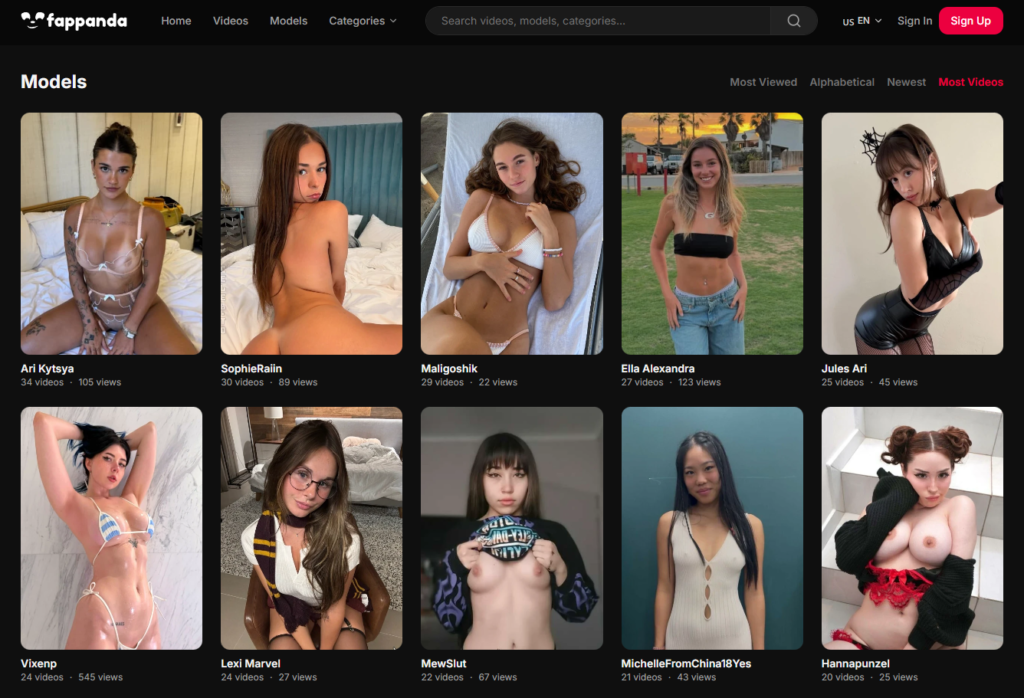
A few patterns will save you time:
Search by creator first, category second. If you have a creator in mind — say, someone you saw on Reddit or a clip you stumbled into — search the creator name directly rather than browsing the category they fit into. Most sites’ creator pages are better-organized than their category pages.
Use specific terms. Generic terms like “leaks” or “free” pull up everything. Adding modifiers — a creator name, a kink, a body type — narrows the result set dramatically.
Watch for upload dates. Newer content tends to be higher quality (1080p / 4K becoming the floor) and has a better chance of working players. Anything older than 2-3 years often has codec issues on modern browsers.
Trust the previews. Hover-to-preview thumbnails (the ones that play a 5-10 second sample) tell you more about the actual content than the title or thumbnail. If the site doesn’t have them, you’re rolling dice on every click.
Where FapPanda Fits In
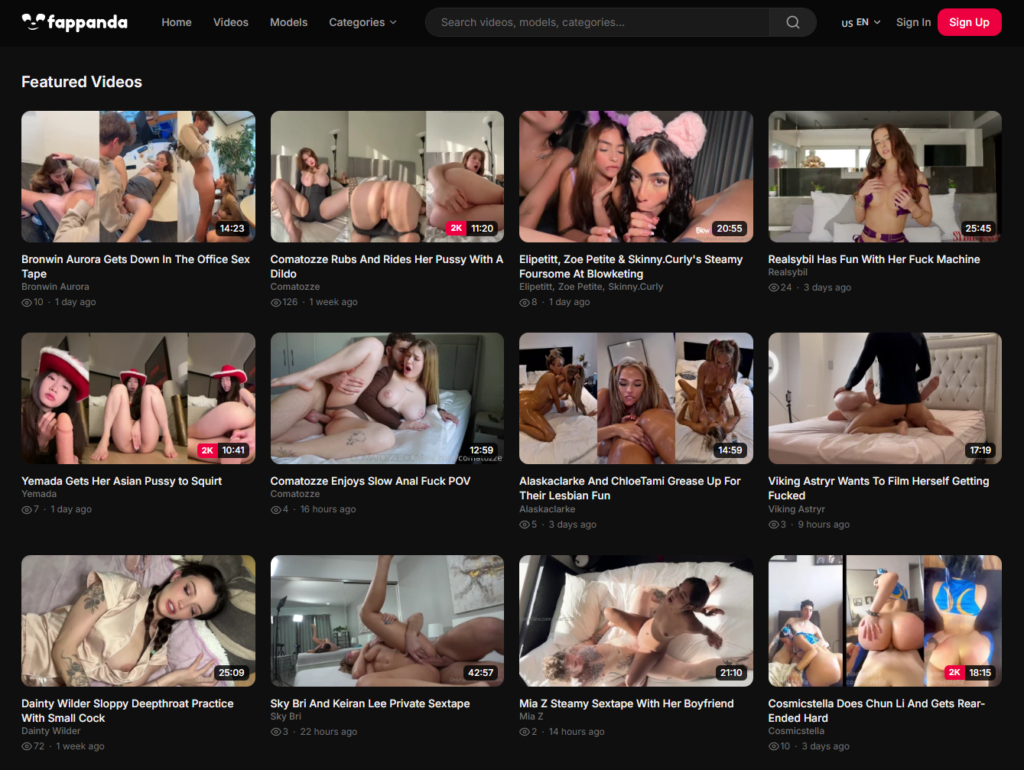
Most leak sites are doing the bare minimum — scrape a feed, throw the videos at a CDN, hope ads load. The good ones invest in the catalog: real creator profiles linked to social media, working categories, fast video delivery without aggressive ad injection, and actual content moderation that keeps takedown requests from piling up.
If you’ve been bouncing between sketchy mirror sites and broken players, it’s worth knowing that the curated end of the leak ecosystem exists. Sites that take catalog work seriously, that organize by creator, that work on mobile, that don’t try to install anything — they’re rarer than they should be, but they’re there.
The Bottom Line
OnlyFans leaks aren’t going anywhere. The economics that drive them — paid content, low watermarking, easy redistribution — haven’t changed since the platform launched, and the creator response (volume + personalization + brand) is now the dominant strategy in the space.
For viewers, the practical takeaway is simple: pick a few sites that actually invest in the experience, bookmark them, and stop bouncing through the long tail of broken mirrors. For creators, the takeaway is harder but more important: the audience is already there. The question is whether to capture them as paying subscribers, ad-driven followers on tube sites, or some hybrid.
Either way, the ecosystem is settling into a steady state. The chaotic free-for-all of 2020-2022 is over. What’s left is a smaller number of sites with real catalogs, real users, and real numbers — and the creators savvy enough to use both sides of the equation.




You must be logged in to post a comment.